









Meet Ramesses II,
our favourite pharaoh
Meet Ramesses II,
our favourite
pharaoh
‍
‍
A ruler who reigned for over 66 years, long enough to become a legend in his own lifetime. Ramesses II presented himself as chosen by the gods and spoke with divine authority.
A warrior who boasted of victories on every frontier, or at least made sure the world believed he had. Ramesses the Great was the first king to be shown with daggers decorated with two falcon heads. They looked really cool.
His full name was truly impressive: The Horus, Strong Bull Loved by Maat, King of Upper and Lower Egypt, Strong in Truth is Re, Chosen of Re, Son of Re, Ramesses Loved by Amun, Loved by Ptah.
A ruler who reigned for over 66 years, long enough to become a legend in his own lifetime. Ramesses II presented himself as chosen by the gods and spoke with divine authority.
A warrior who boasted of victories on every frontier, or at least made sure the world believed he had. Ramesses the Great was the first king to be shown with daggers decorated with two falcon heads. They looked really cool.
His full name was truly impressive: The Horus, Strong Bull Loved by Maat, King of Upper and Lower Egypt, Strong in Truth is Re, Chosen of Re, Son of Re, Ramesses Loved by Amun, Loved by Ptah.
This is the story of Ramesses’ journey,
an odyssey through time and space
This is the story of Ramesses’ journey,
an odyssey through time and space
I
In 2025, a new wonder of the world finally opened its doors. After two decades of construction and more than a billion dollars in costs, the Grand Egyptian Museum (GEM) welcomed visitors and scholars alike.
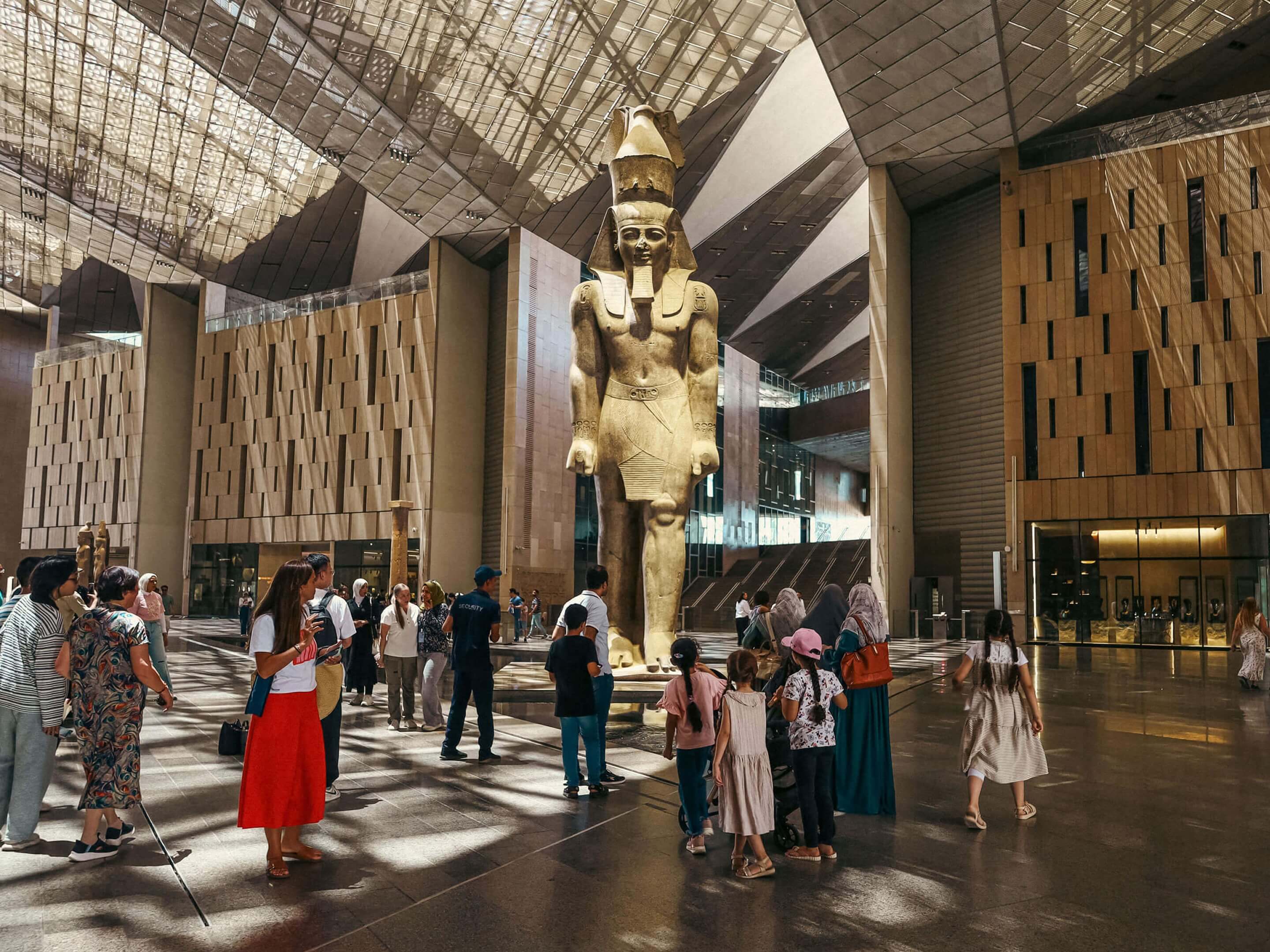
Inside are 100,000 priceless artefacts, led by the colossal statue of Ramesses ii, the first object registered in the collection and still labelled gem 1.
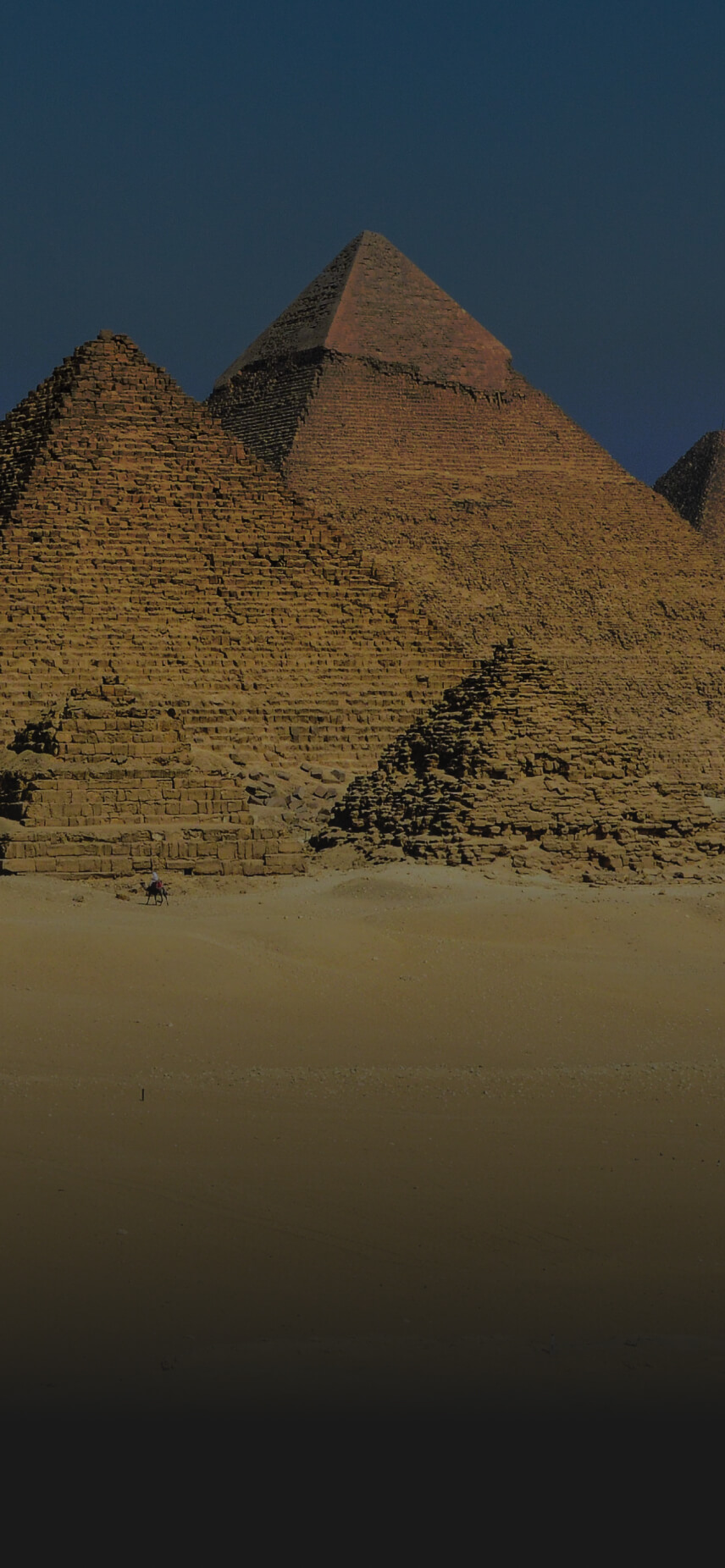
The museum stands in deliberate alignment with the pyramids of Giza, just two kilometres away, presenting itself as a modern continuation of Egypt’s ancient architectural vision.
To learn how an ancient colossus
ended up in a modern museum,
we need to travel back in time
To learn how an
ancient colossus
ended up in
a modern museum,
we need to travel
back in time
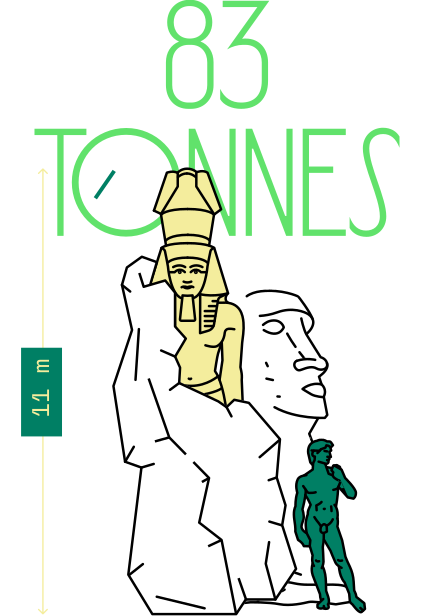
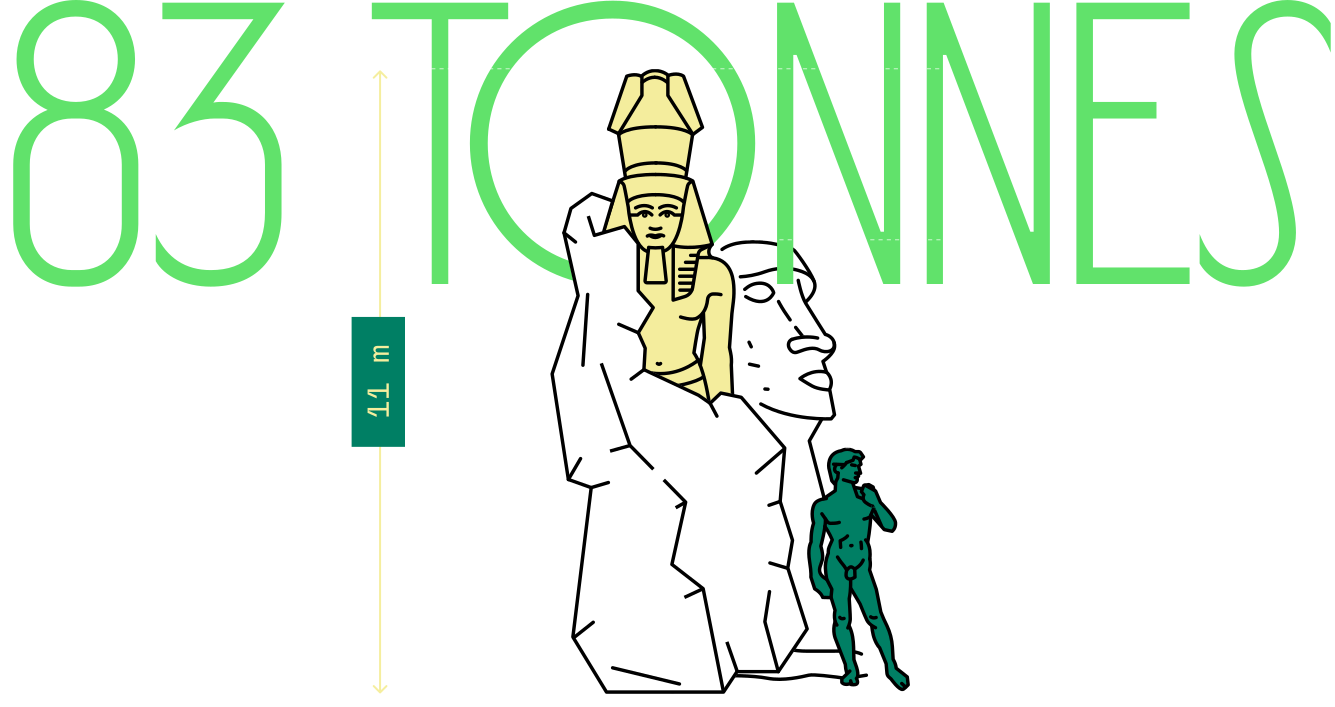
Nearly 3,300 years ago, in 1250 bc, a block of red granite was carved in Aswan into what became the towering statue of Ramesses ii: eleven metres tall and weighing 83 tonnes.

Ramesses II didn’t just commission the sculpture: he personally chose the quarry. Now, that’s micromanagement!

Imagine being the royal sculptor, handed the most prestigious job: carving a king’s statue. You’ve never met the man, but you know his face well. Royal likenesses were distributed as 3d reference models, ensuring every statue, wherever it was made, matched the real thing, or at least its idealised version.

With the pharaoh’s features in mind, you start by sketching the front, sides, and back onto a granite block. Then the carving begins: gradually chipping away the excess until a rough shape emerges. Hard granite was worked with tougher basalt hammers and sand as an abrasive, while softer stones like limestone or sandstone could be shaped with flint, copper, or bronze tools.

How big was Ramesses, really?
The infographic stacks his 11-metre statue against Michelangelo’s David at 4 metres, a moai from Easter Island at 8, and an ordinary human for scale.
© Méridien 2026 — CC BY-NC 4.0

With the pharaoh’s features in mind, you start by sketching the front, sides, and back onto a granite block. Then the carving begins: gradually chipping away the excess until a rough shape emerges. Hard granite was worked with tougher basalt hammers and sand as an abrasive, while softer stones like limestone or sandstone could be shaped with flint, copper, or bronze tools.

How big was Ramesses, really?
The infographic stacks his 11-metre statue against Michelangelo’s David at 4 metres, a moai from Easter Island at 8, and an ordinary human for scale.
© Méridien 2026 — CC BY-NC 4.0

According to Susanna Thomas, Egyptologist and author of Ramesses, Loved by Ptah, granite statues like Ramesses II were usually finished in the quarry itself, with only the final polish completed at their destination. In an interview with Méridien, she explained that “it took about one year from start to finish. Teams of men would have been involved, including the master artist supervisor and all the other craftsmen, government officials (of course), soldiers to guard everything, and all the people needed to move the statue from the quarry to its final destination.”

So, how did the Egyptians move these massive sculptures? With physics, of course!

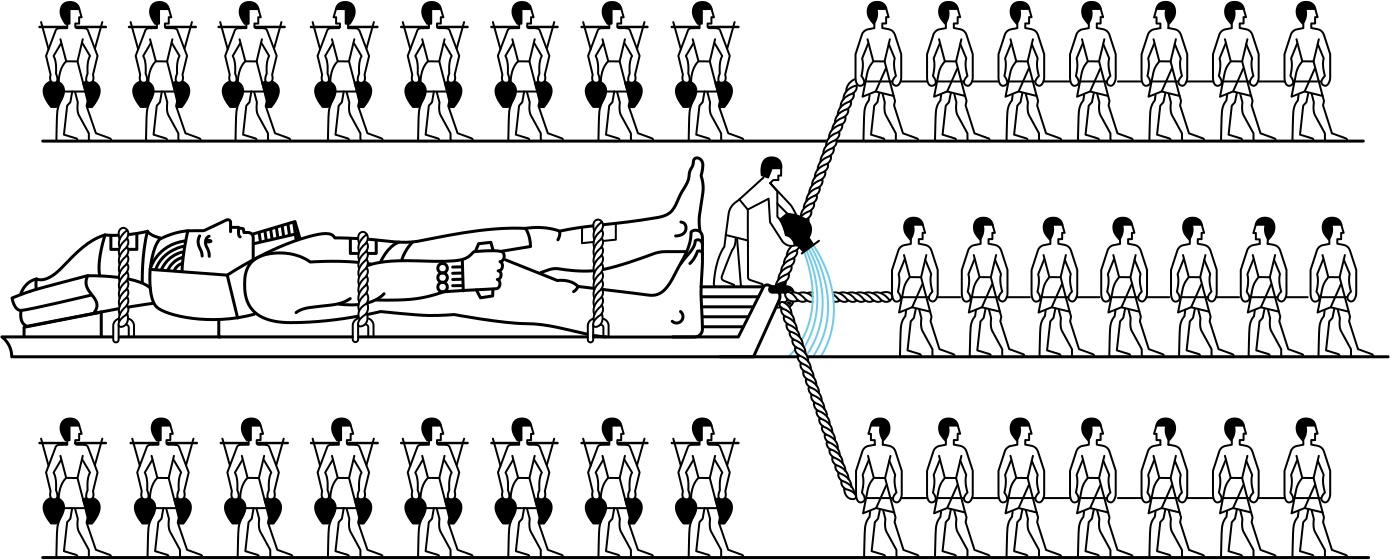
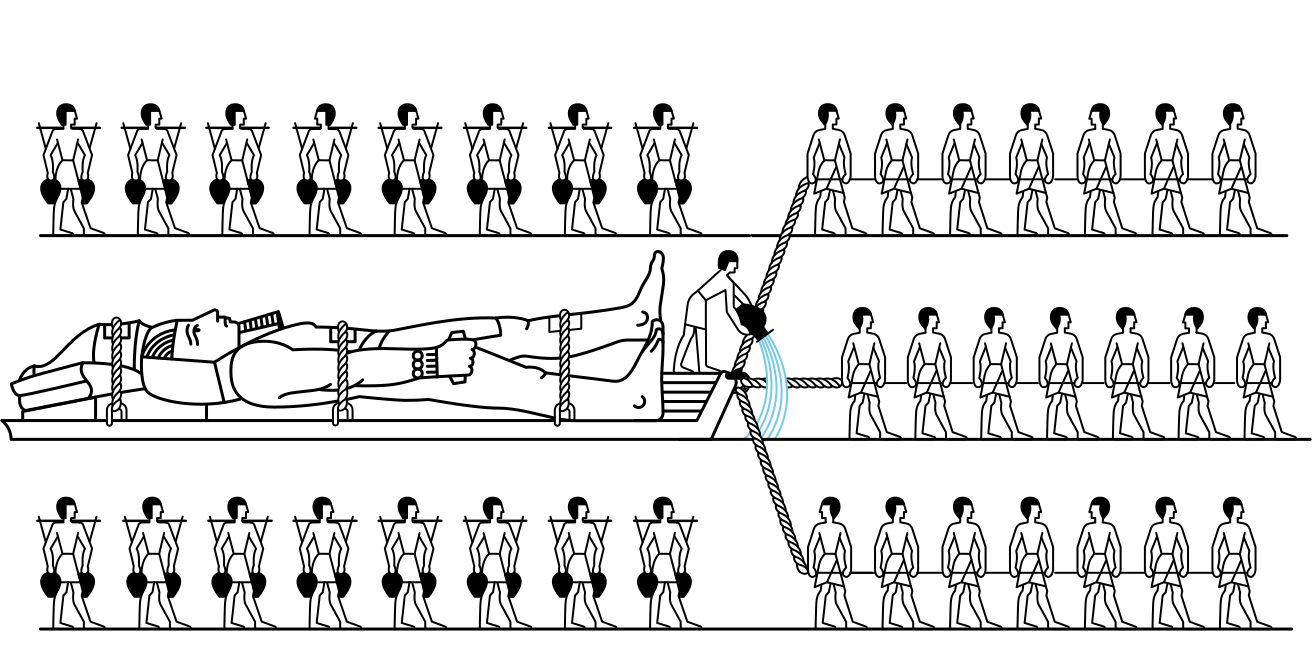
First, workers dragged the statues on sledges along specially constructed quarry roads to the Nile. No animals were involved, because who needs oxen when you’ve got human resources? Dragging heavy loads over desert sand might sound like a nightmare, but the Egyptians had a trick up their sleeve: they poured water onto the sand to reduce friction, making it easier to pull.

Then came the river journey to Memphis, Egypt’s ancient capital. Luckily, the Nile flows north, exactly the direction they needed to go. That meant the 800-kilometre trip from Aswan could be done with the current helping push the barge along. And here’s another trick: to make the sailing smoother, time the delivery with the annual flood! A handy system of canals and basins took the statue the rest of the way, right up to the temple gates. If you were on that crew, you definitely earned yourself a jug of warm beer and maybe a nap in the shade.

Adding water to sand makes it up to 40% easier to drag a heavy sledge

Moving the colossus with a water-lubricated sledge. Based on Djehutihotep's tomb painting. © Méridien 2026 — CC BY-NC 4.0

Moving the colossus with a water-lubricated sledge. Based on Djehutihotep's tomb painting. © Méridien 2026 — CC BY-NC 4.0

—Wait, but how long did the journey actually take? And how many people did it need?

Sources are scarce, but we can make a good guess. Around 2,000 workers hauled the 83-tonne statue from the quarry, inch by inch, a painfully slow process. From there, the river journey took about a month before the colossus finally reached the temple. The scale was enormous, but Ramesses ruled for generations: he had all the time in the world.

Some pharaohs, including Ramesses II, stayed in power for an exceptionally long time.

Ramesses II ruled for seven decades, but Pepi II may have lasted even longer, though that is debated. Think about it: people were born, lived their entire lives, and died while the same ruler sat on the throne. After a while, such kings were no longer seen as merely human but as gods walking the Earth.
Old Kingdom First Intermediate Period Middle Kingdom New Kingdom Third Intermediate Period Late Period Macedonian Period Ptolemaic Period

© Méridien 2026 — CC BY-NC 4.0)

© Méridien 2026 — CC BY 4.0. Data: Metropolitan Museum of Art

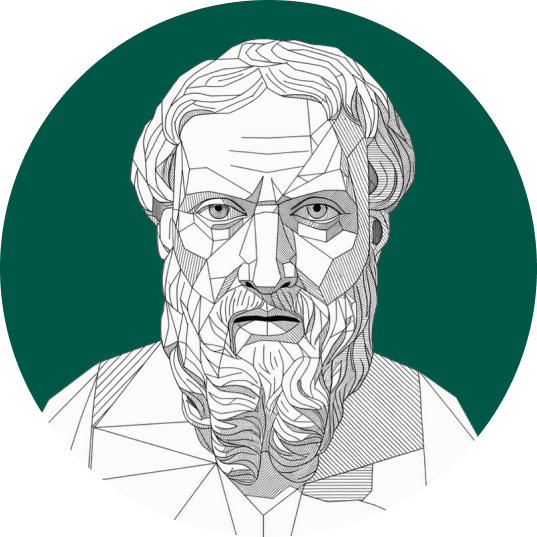
At the Temple of Ptah in Memphis, the statue was an instant crowd-pleaser. When Herodotus passed through around 455 bce, he gave it a glowing review — five stars, no notes. The original travel blogger did love a good colossus.

“The memorial of Ramesses left by him was the western forecourt of the temple. He set statues here, forty-one feet high.”

Herodotus
(c. 484 BC–c. 425 BC)
Greek historian and geographer, often called “the Father of History”.

Yet, Emperor Theodosius I was no fan. By 390, he had banned pagan practices to promote Christianity in the Roman Empire, and temples across Egypt shut their doors. The statue, however, endured. In 1595, Jacques de Villamont, author of the most popular French travel book of the age, described seeing it in the sands of Memphis.

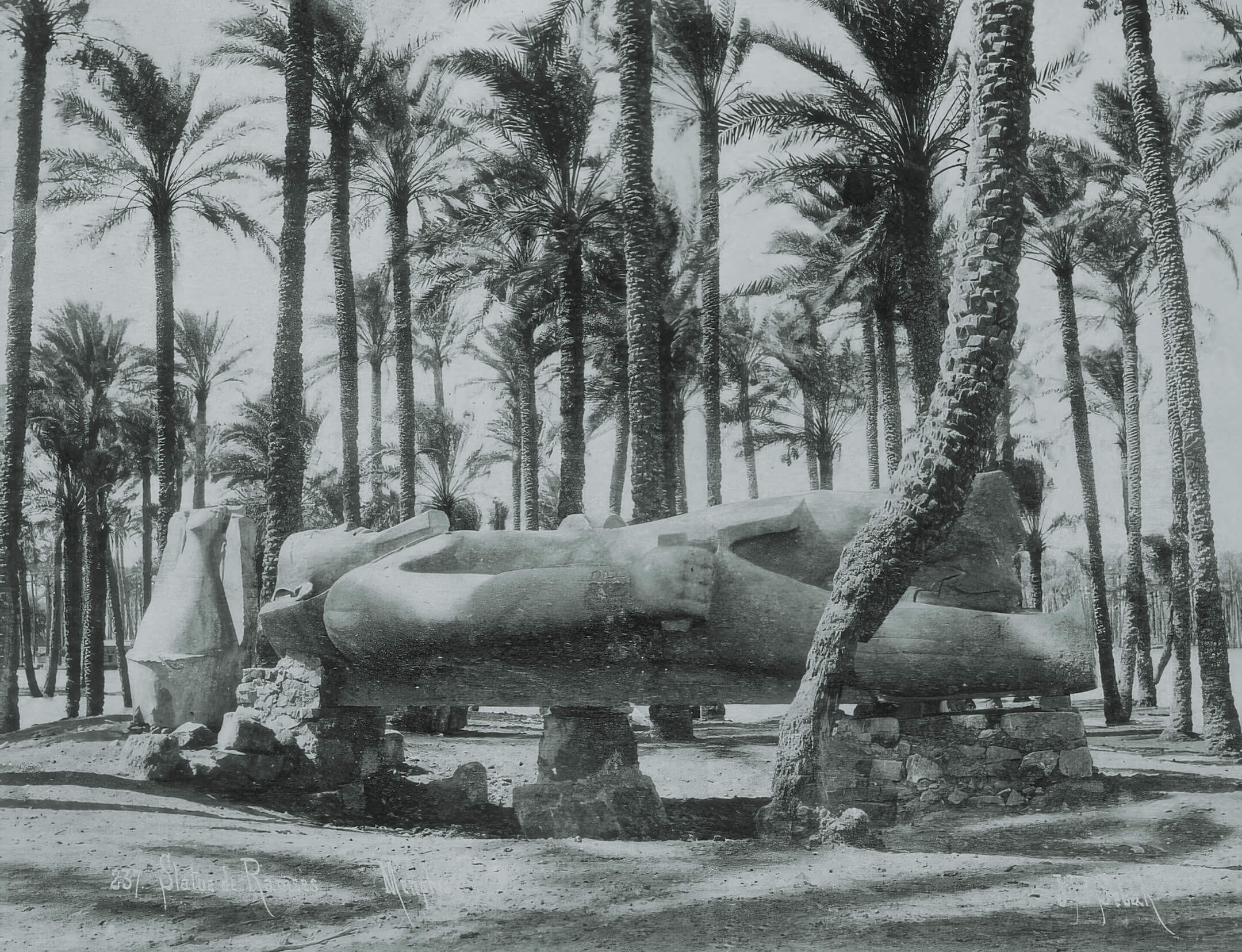
Statue of Ramesses in Memphis, 1880s. Photo: Jean Pascal Sébah

Statue of Ramesses in Memphis, 1880s. Photo: Jean Pascal Sébah

And here’s the twist: there were two giant statues of Ramesses in the temple! Even major publications, including National Geographic, kept mixing them up.

By 1700, the Temple of Ptah and its mighty monuments were in shapeless ruins. Things only got messier from there. Ramesses had two colossal statues made: one of granite and the other of limestone. Today, one stands in the Grand Egyptian Museum; the other remains in Memphis (modern-day Mit Rahina, to be precise). The twins look similar enough to confuse everyone. Some sources credit their discovery to Italian explorer Giovanni Battista Caviglia. He did find a statue in 1821, but it was limestone, not granite.

Susanna Thomas was surprised by the confusion, which she attributes to a lack of desire to check sources. “The two statues are quite different, after all,” she said. “The Mit Rahina one is made of limestone and still retains its nose, as well as much finer details.”

Joseph Hekekyan
(1807–1875)
Armenian administrator, archaeologist, and civil engineer who spent most of his life in Egypt.

The real credit goes to Armenian engineer Joseph Hekekyan, who rediscovered the granite statue in 1854. It lay on its right side, legs broken above the ankles, feet missing. Three decades later, British military engineers raised both statues above flood level and set them on platforms. They stayed in Memphis for the next 60 years, until someone decided to find a better place for one of them.

It took five hours to transport the statue from Mit Rahina to Cairo, at an average speed of 6 km/h.

After the 1952 revolution, Egypt’s new leaders were eager to boost national pride. Ramesses was the perfect symbol.

In February 1955, a truck hauled the giant granite king out of the village of Mit Rahina. The locals were not thrilled. The statue had been their star attraction, drawing tourists and money for years. As if that weren’t enough, engineers had to reinforce two bridges along the route to carry the weight of Ramesses. The whole thing turned into a full-blown infrastructure saga. One wrong move, and the pharaoh could’ve ended up in the Nile!

1955 footage of Ramesses II’s statue being moved to Cairo. Video: British Pathé. Photo: Amnat/Alamy.

1955 footage of Ramesses II’s statue being moved to Cairo. Video: British Pathé. Photo: Amnat/Alamy.

The statue was moved on 24 February 1955. Its unveiling was scheduled for July, but technical difficulties delayed the ceremony until November.

Once in Cairo, the colossus needed major repairs. Workers spent ten months restoring its former glory. They added iron rods inside to keep it from falling apart. No more missing legs! In November, Ramesses finally took his place in the city’s busiest square, next to the main train station. The place even got a new name: Ramses Square. Because if you’re going to relocate a god-king, you might as well rename the whole neighbourhood. The move was clearly symbolic. Greeting passengers at the station, Ramesses II stepped back into his old role as Egypt’s chief image maker.

—So, was that the statue’s final move?

Not even close. He still had two more journeys ahead of him.

The trip took ten hours to cover just 26 kilometres and cost about $1 million.

How do you save an ancient statue from traffic fumes? You move it to a brand-new museum.

In 2006, Egypt decided Ramesses would go to the yet-to-be-built Grand Egyptian Museum. Engineers wrapped him in scaffolding, scanned every inch with lasers, and ran three test moves: two with limestone blocks, one with a replica. Nobody wanted to be the person who dropped the pharaoh’s nose on live TV.

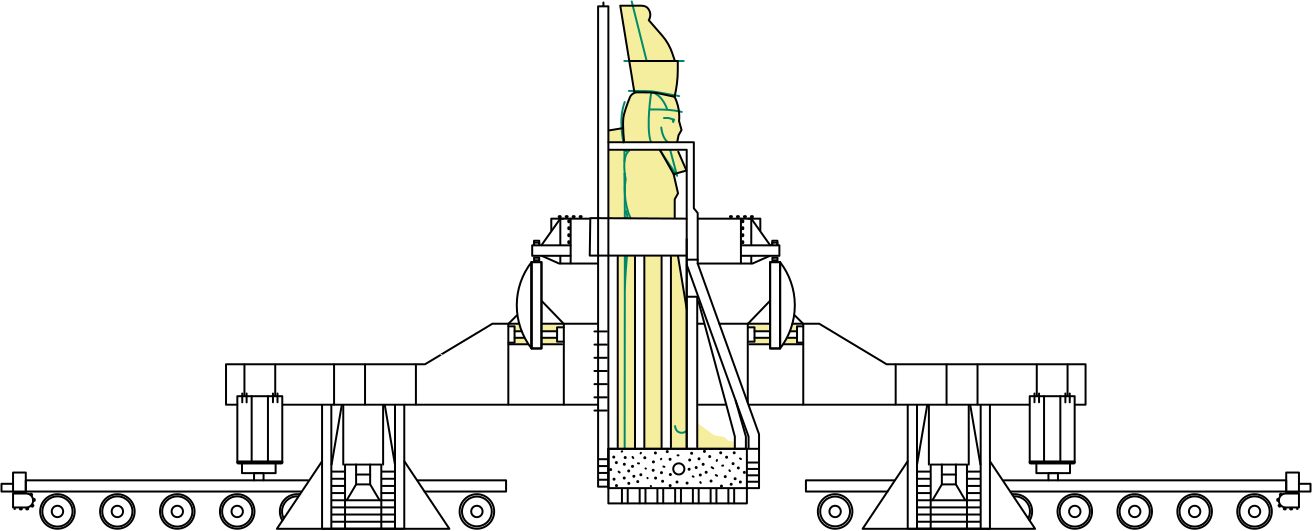
The first big move came in 2006: two flatbed trucks carried him in a steel cage through Cairo, his head poking out so the crowds could see. The trip took ten hours to cover just 26 kilometres, cost about $1 million, and left Ramesses waiting at the museum site.

How Ramesses II was transported in 2006
How Ramesses II was transported in 2006: the statue in a reinforced iron cage, lined with rubber foam and suspended from a steel bridge frame between two flatbed trucks.

Transport platform for the statue. Based on an engineer’s drawing.
© Méridien 2026 — CC BY-NC 4.0

How Ramesses II was transported in 2006
How Ramesses II was transported in 2006: the statue in a reinforced iron cage, lined with rubber foam and suspended from a steel bridge frame between two flatbed trucks.
Transport platform for the statue. Based on an engineer’s drawing.
© Méridien 2026 — CC BY-NC 4.0

Before the final journey, engineers built a 3d model from millions of laser scans and rehearsed the whole operation on screen. By 2017, a special road was ready. In January 2018, with a marching band, horses, and cameras, Ramesses rolled 450 metres down the road. The short trip cost $800,000, but the pharaoh arrived safe, polished, and perfectly placed in the museum’s grand hall.

The statue of Ramesses II in the atrium of the Grand Egyptian Museum. Photo: Ayman Zaid/Alamy.
The Grand Egyptian Museum houses more than 100,000 artefacts

The Grand Egyptian Museum leans on technology to preserve and present Egypt’s past.

In fact, it was built twice: once in data, then in concrete. Engineers tested every wall, beam, and display case in 3D before they touched the real thing. Even fallen monuments, like Ramesses’ obelisk, were scanned, reassembled, and raised at the entrance, allowing visitors to read its carvings from all sides.

Inside, the story continues. Tombs, temples, and even sunken cities were reconstructed in data before they became immersive displays. Visitors can walk through Khnumhotep’s chapel, explore the underworld’s oldest map, or see Alexandria’s ruins rise from the seabed, all first rendered in pixels, then brought to life. Tutankhamun has his own blockbuster space at the Grand Egyptian Museum, with more than 5,000 objects from his tomb displayed together for the first time. 

And at the heart of it all stands Ramesses the Great, whose statue was the first object selected for gem—hence its registration as gem 1. For the ancients, his statues were the living king, guarding, commanding, asserting power. Today, he’s watched by tourists instead of priests, but the message is the same. Three millennia on, Ramesses is still exactly where he wanted to be: present, powerful, impossible to ignore.

Published
1 October 2026
Reading list
Show all

Acknowledgements: We would like to thank Egyptologist Susanna Thomas for her contributions to this project. Her recent book, Ramesses, Loved by Ptah, was an invaluable resource for the research.

Editorial team: Research and writing Elia Kabanov. Geospatial and data storytelling Alexander Bogachev. Design Vasiliy Egorov. Development Vladimir Kuznetsov. 3d modelling Dmitry Smirnov. Illustrations Lucy Redko. Project management Anastasia Antipova. Art direction Eugene Yukechev.

Special thanks: Sasha Derivanov, Vladimir Terentyev, Maria Karaselnikova, Amr Elenein, Ahmed Serag and Nahla ElBanhawy.

Credits: Research, editing, design, illustrations, visualisations and layout by Méridien. Custom 3D models of the Memphis temple and the Grand Egyptian Museum created by Méridien. Map engine: Mapbox. Map sources: OpenStreetMap. The 3D model of the statue of Ramesses II is based on work by Suspishus/CGTrader. Pyramids video: Merlin74/Pond5. Newsreels: British Pathé. GEM photos: Susanna Thomas. Ramesses video: Creativity lover/Shutterstock. Hekekyan and Herodotus portraits based on public domain images.


EGYPT
Cairo
What followed was the start of a long journey. Workers floated the statue 800 km north to Memphis on custom-built barges. It probably took weeks, hopefully with lunch breaks.
Ramesses II stood at the Great Temple of Ptah for centuries, until gravity won. After nearly 3,000 years, the statue fell and spent some quality time relaxing in the sand.
Ramesses II ordered a colossal red-granite statue of himself to stand at the east gateway of Ptah’s temple
The large temple complex stood just east of the present-day village of Mit Rahina. Memphis once stood on the Nile’s banks, but the river gradually shifted east
1955
In 1955, Egypt’s new republic gave Ramesses a second life. Engineers transported the statue 30 km to Cairo and installed it outside the main train station.
Pollution and constant vibrations had taken their toll. By the early 2000s, Ramesses needed cleaner air, so the statue went to Giza.
In 2018, Ramesses entered the Grand Egyptian Museum. It took 3,300 years and four relocations, but the pharaoh finally stands in peace, surrounded by 100,000 priceless artefacts.
Ramesses II in the atrium of the Grand Egyptian Museum
This is the story of Ramesses the Great,
his odyssey through time and space
This is the story of
Ramesses the Great,
his odyssey through
time and space

Hi, I am Reporter
Ask this article anything.

I am the reading assistant for this article. I answer from the piece itself, cite the passage I used, and say so when it does not cover something.